

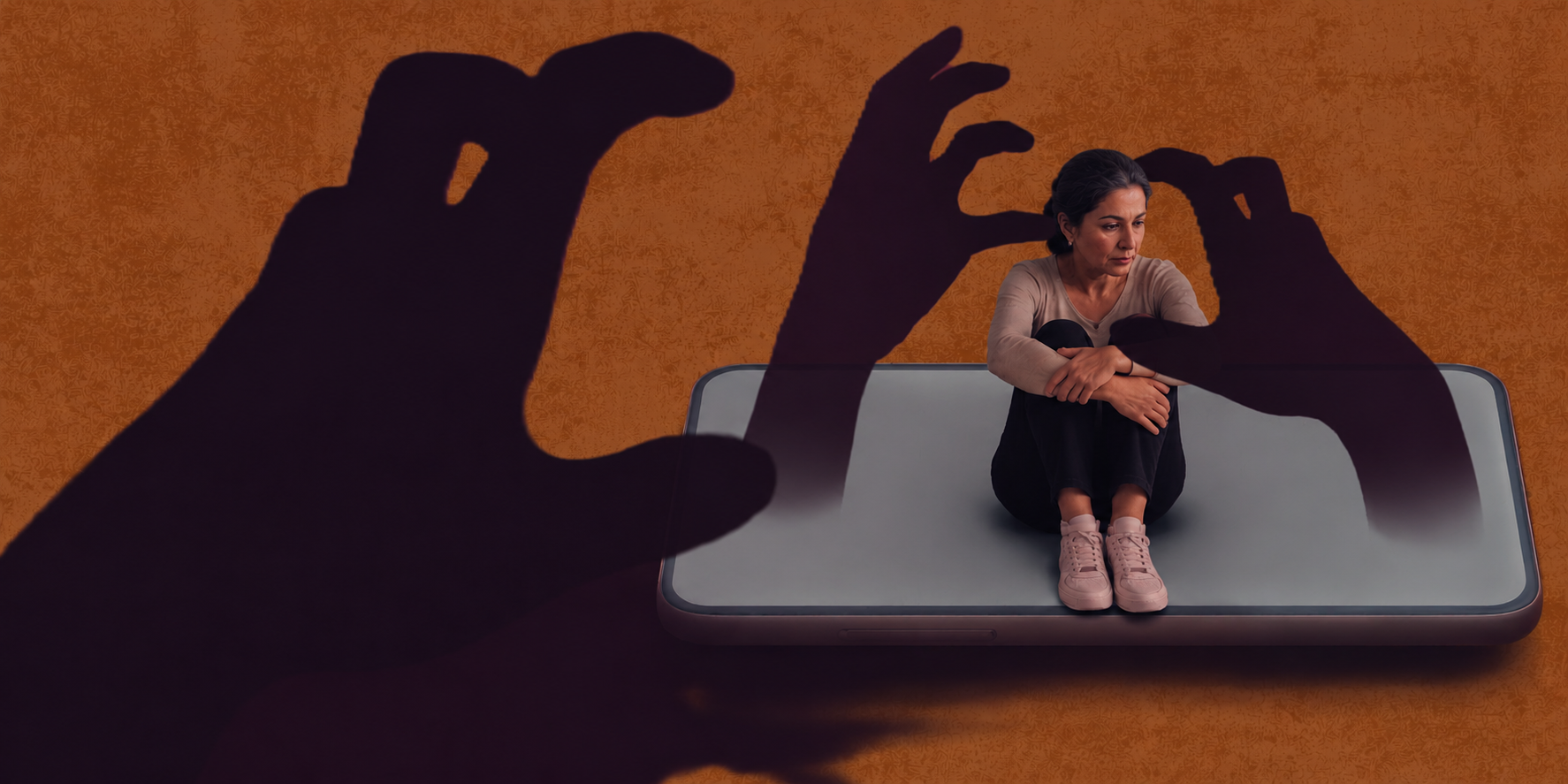
In a previous article, we discussed technology-facilitated violence, its impact on women and girls, and the need for more effective policies and serious action to confront it. But the danger of this kind of violence does not stop at the moment of the attack. What follows is often more complex: the victim's ability to protect herself, preserve evidence, access support, and reach justice.
Experience shows that many women face not only the digital attack itself but confusion about what steps to take, fear of stigma, fear that the harassment will escalate, or fear that their reports will be ignored. Confronting digital violence requires a comprehensive approach that begins with awareness, moves through documentation and reporting, and extends to legal, psychological, and community support.
Prevention is the first line of defence. Reporting is the decisive step between violence becoming a permanent reality and holding perpetrators accountable. Yet reporting remains one of the most difficult stages for victims. Many do not know where to begin, lack information about reporting mechanisms, or fear that the pursuit of justice will become another experience of doubt and stigma.
Reporting should not be seen as merely a legal procedure. It is a fundamental step in protecting the victim and preventing further violations, against her and against others. Every documented report helps reveal patterns of abuse and assists the relevant authorities and digital platforms in intervening earlier, limiting the spread of harm and preventing repeat offences.
Reporting on platforms
In recent years, most social media platforms have introduced tools for reporting abusive content, whether it involves harassment, bullying, threats, non-consensual intimate images, identity theft, or hate speech. Platforms like Facebook, Instagram, X, TikTok, and WhatsApp offer clear pathways for reporting posts, messages, or accounts, as well as the ability to block the attacker and prevent further contact.
These tools do not always work as effectively as they should. But using them remains a necessary step, not only to remove abusive content but to build a record of reports that can help address accounts that engage in repeated or organised abuse.
The responsibility of digital platforms does not end at providing a report button. These platforms are more than communication tools. They have become primary spaces for public discourse, shaping who can speak freely and who withdraws under the weight of abuse or threats. They have a larger role to play in creating a safer digital environment: developing policies that are more responsive to gender-based violence, handling reports swiftly, and providing effective tools to protect victims – particularly in cases of organised attacks, the publication of personal data, or the non-consensual sharing of intimate images.
The legal path
The legal path is one of the most important tools for protection against digital violence. Many of these violations amount to criminal offences: threats, blackmail, defamation, invasion of privacy, account hacking, or the unlawful publication of personal data. Reporting to the relevant authorities – in Egypt, the Information Technology Crime Investigation Unit (internet police) – is a necessary step to protect the victim and hold the perpetrator accountable.
The effectiveness of this path depends on the quality of documentation. Screenshots, account links, phone numbers, and a clear timeline of events are essential evidence that can support the investigation and prove the offence. The more precise and complete the documentation, the better the chances of appropriate legal action and meaningful outcomes.
Digital hygiene
In this context, what is known as "digital hygiene" becomes critical. It is a set of everyday practices that help reduce the risk of being targeted. This includes deleting unused accounts, reviewing which apps have access to personal data, regularly checking devices, and minimising the personal information available publicly. These steps matter because many digital attacks exploit simple vulnerabilities or gaps in awareness rather than relying on sophisticated technical methods.
When an attack happens
When an attack occurs, documentation becomes the most important step. Many victims delete abusive messages or comments out of fear or a desire to move on quickly, but this can result in losing evidence that is difficult to recover later.
It is better to save screenshots that include the date and time of messages, preserve account links or phone numbers used in the attack, and keep any information that could help prove the incident. Thorough documentation strengthens the chances of a serious response to the report and provides evidence that can be relied upon when contacting platforms or the relevant authorities.
Engaging in direct confrontation with the attacker is rarely a solution. Many digital harassment campaigns are designed to draw the victim into interaction, aiming to widen the reach or escalate the attack. Refraining from responding, while documenting the incident and reporting it, is often more effective than entering battles that never end on platforms designed to maximise engagement.
Beyond the legal response
Despite the importance of the legal path, its impact remains limited if it stops at punishing the perpetrator. Digital violence leaves behind psychological, social, and professional effects that can persist even after the abusive content is deleted or the accounts involved are shut down. Victims often need support to help them recover and regain a sense of safety.
This is where the support networks provided by specialised organisations, civil society initiatives, and bodies offering legal, technical, or psychological assistance become essential. Addressing digital violence requires an integrated response that meets victims' needs at different stages of recovery, whether restoring accounts and data, clarifying legal rights, or providing the psychological support needed to move past the experience.
In the Arab world, there are organisations and initiatives offering specialised services for victims of digital violence. These include the digital safety support platform of SMEX, which provides assistance to journalists, activists, and internet users, alongside organisations working in digital rights such as Masaar, and initiatives offering legal and technical consultations or helplines for victims of blackmail and digital violence.
The role of those around the victim
The circle around the victim also has a role to play. Friends, colleagues, and family members can help limit the effects of an attack if they respond responsibly: standing with the victim, respecting her privacy, reporting abusive content, helping document violations, and directing her to appropriate support – while being careful not to reshare abusive content or contribute to its spread.
Doubting the victim's account, holding her responsible for what happened, or asking her to stay silent only compounds the harm and prolongs the suffering. In cases of organised attacks, this solidarity may be one of the most important factors in helping the victim overcome her sense of isolation and in undermining the attackers' ability to achieve their aims.
A shared responsibility
Technology-facilitated violence is not about devices or platforms so much as it is about how these tools are used and about the power dynamics that allow violations to continue. Technology has given attackers faster access to victims, wider reach, and greater anonymity, extending the effects of violence far beyond the screen.
Confronting this phenomenon requires a collective effort involving the state, digital platforms, civil society organisations, the media, and users themselves. Each has a role in building a safer digital space that allows women and girls to participate and express their views without fear.
The safety of the digital space is not measured by the number of accounts that are blocked. It is measured by women's ability to use it freely – to work, to speak, to participate in public discourse without their presence becoming a reason for defamation, threats, or blackmail. Every woman forced to withdraw from this space under the weight of violence is not the only one who loses. Society loses a voice, an experience, and a new space for dialogue.