


Salma lived through a difficult marriage in which her husband subjected her to violence and beatings, including during her pregnancy, when she suffered bleeding that threatened a miscarriage. She and her baby survived, but that was not enough to deter her husband, who justified the violence by calling himself "short-tempered." When she asked for a divorce, her request only made him more violent, and he threatened to kill her and their two children.
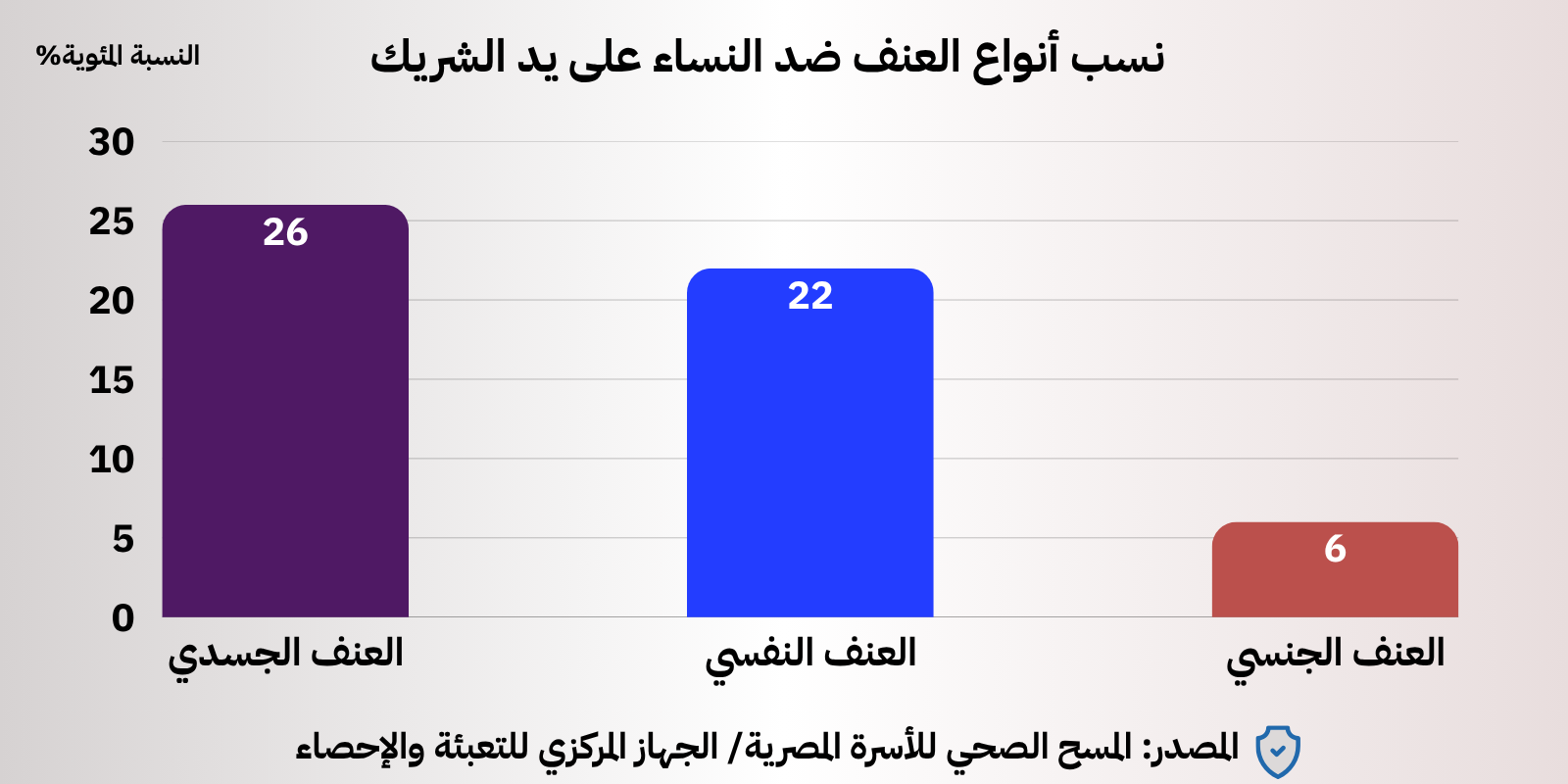
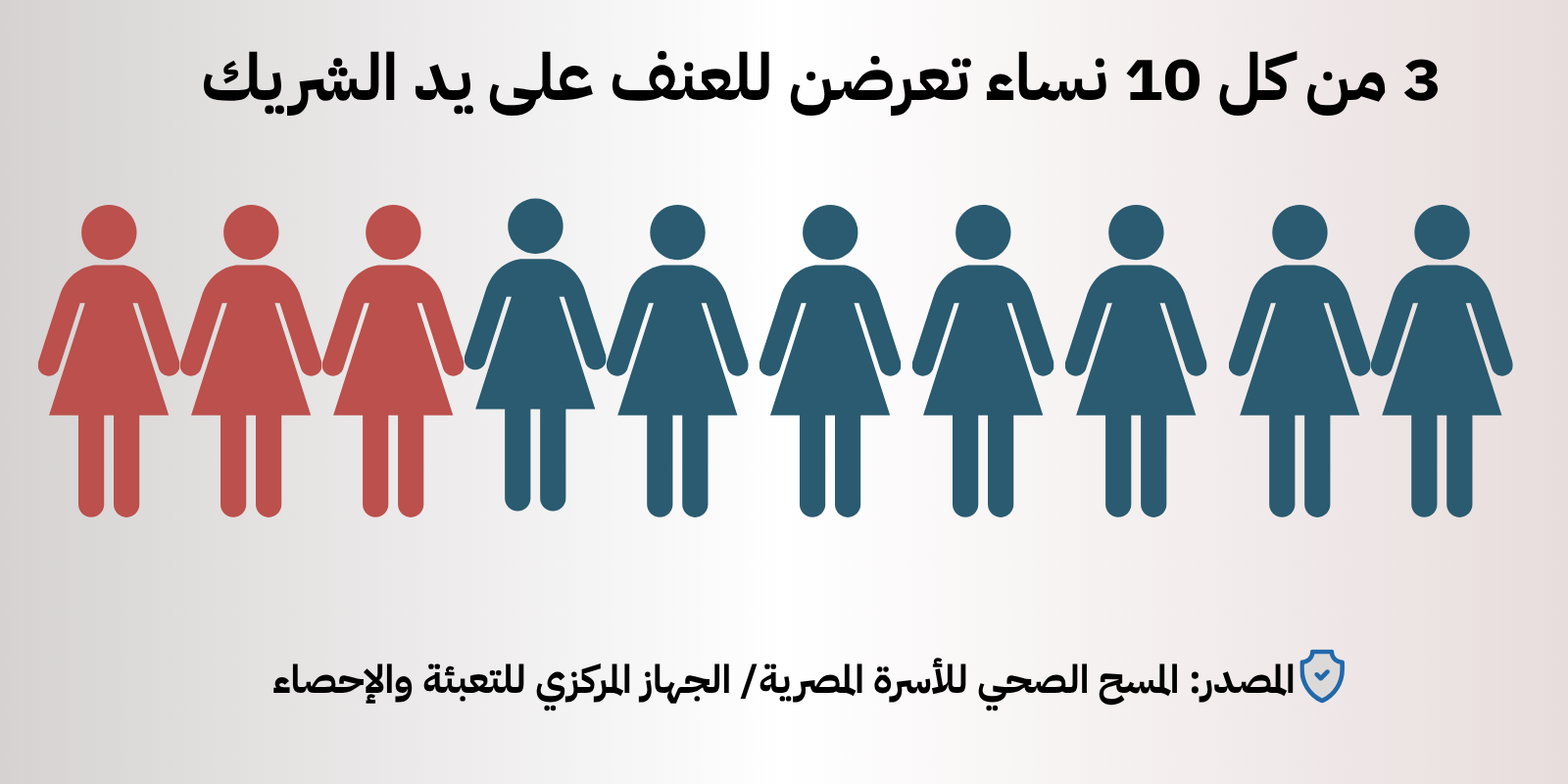
Thirty-one per cent of women who are currently or were previously married in Egypt have experienced violence at the hands of their husbands, according to data from the Egyptian Family Health Survey published by the Central Agency for Public Mobilisation and Statistics in August 2022.
"He tried to kill me – and I suffered violence as both a wife and a divorcee"
Salma says she cannot recall any major incident that provoked the beatings. Once, she was beaten for accidentally spilling drops of soup on the carpet. Another time, because their baby was crying while she cooked his meal.
She filed for khul' – a form of divorce initiated by the wife – to free herself from his violence, but he attacked her repeatedly at her workplace and at her sister's home, where she had moved. He would come trying to persuade her to drop the case, and when she refused, he would assault her and threaten to kill her. The attacks did not stop even after the divorce was finalised.
One morning at her rented apartment on the outskirts of Cairo, she woke at six to violent banging on the building's iron door, shouting and obscenities. When she opened the door, he grabbed her by the hair and pulled a knife, threatening to kill her while their children screamed in terror.
Neighbours managed to restrain him, but he left vowing that the next attempt would succeed. Despite her divorce, Salma did not sleep safely until she left the country on a work contract, leaving her two children in her sister's care, hoping to build a life for them far from the man who had abused her as both a wife and an ex-wife.
A study titled "Post-Separation Abuse: A Concept Analysis" defines post-separation abuse as a sustained and deliberate pattern of intimidating a former partner, including legal and economic abuse, threats, reputation damage, harassment, stalking, endangering children, and isolation, causing victims to live in fear and intimidation. The study notes that the consequences of this type of violence can be fatal.
"My son with autism was held captive"
Mai was among those enduring violence from a former partner while her khul' case was still before the courts. She had married and lived with her husband in another country where he worked, but his persistent abuse pushed her to seek separation. He responded with even greater harm to her and their son, and when she asked to return to Egypt on leave, he insisted on keeping their son, who shows signs of autism.
"My son needs me and I need him," Mai says. "That was the worst psychological harm to both of us. He actually prevented me from taking my son, and to this day he has him in the country where he works, deprived of all the rehabilitation sessions and care that children his age and in his condition need."
When Mai left her husband's country and returned to Egypt, she was pregnant. She describes it as "the worst pregnancy a woman could live through." She says: "I was anxious and scared and didn't know what I would do. I wished the pregnancy would end so that my son wouldn't have to see what I went through."
Mai assumed divorce would bring a better end to the strained marriage, allowing her to care for their son in a calm environment. But the moment she told her husband of her intention to separate, which he rejected, he became more aggressive, attacking her reputation. "He threatened me and went as far as denying our second child, who he has never seen or spent a single penny on. That caused me greater pain than even the physical violence."
With her husband refusing to divorce her, Mai ultimately filed for khul', relinquishing her rights in exchange for her freedom from the abusive relationship.
Society sometimes offers justifications for the perpetrator
Lawyer Amr Mohamed, who works on violence against women cases, says that violence against former partners has always existed, but social media and media attention have encouraged some victims and survivors to speak out, whereas before such matters were kept quiet out of fear of stigma and blame, especially when the victim faced blackmail, public shaming, and attacks on her honour.
Mohamed adds that the most common crimes against former partners, in his observation, are blackmail, defamation, and reputation damage. Some crimes are more violent and dangerous: murders committed against women and girls for refusing a relationship, among them Nayera Ashraf and Salma Bahgat. He warns of the danger of society providing justifications for the perpetrator, such as concern for his children, and other ideas that lend social acceptance to violence against former partners.
Mohamed notes "problems in the legal framework for dealing with violence against women. Reporting and complaint mechanisms are not accessible to victims, and there are no protection guarantees. Some women are assaulted specifically because they filed complaints against their former partners." He considers that violence against former partners, especially severe crimes like murder and disfigurement, puts pressure on women currently experiencing violence: "It makes them think a million times before asking for separation or divorce. I see many cases where women accept the violence because they cannot predict what he might do to them after the divorce, or they are threatened if they decide to leave."
Asmaa faced defamation and blackmail with divorce
Asmaa is another woman who experienced violence as both a wife and a divorcee. She was beaten, verbally abused, and psychologically tormented during her marriage.
Her husband would stay in the governorate where he worked for months at a time, far from their home, and refused all her attempts to repair the relationship. She eventually asked for separation so she could focus on caring for her child from a previous marriage to a deceased husband.
After beating her violently, he divorced her three times in one day. But her expectation that separation would end her suffering and let her focus on her child did not materialise. He continued to pursue her, threatening assault and fabricating accusations to damage her reputation.
"He would call and threaten me to a degree that terrified me. He threatened to hurt my son. I would stay in the house for weeks, too scared even to open the window. Then he began a worse phase. He blackmailed me and demanded money to keep from destroying my reputation."
Shocked and driven by fear for her son and her reputation, she paid him tens of thousands of pounds. When she stopped paying, he assaulted her again and began calling her mother and friends to defame her. She resumed paying, fearing he would contact her relatives. "We're from Upper Egypt, and reputation is no joke. I could have been killed – by him or even by my own family if they believed him."
Asmaa eventually decided to stop giving in, whatever the cost. "I hated my life and couldn't cope. So I decided to stop all the harm. I used his calls and messages where he threatened and blackmailed me, and the money transfer records, and I filed a blackmail case against him – and I won."
Asmaa says she made the decision to fight back after seeing the severe impact on her son. The boy, who had lost his biological father at the age of two and called her husband "baba," found himself watching his stepfather abuse and threaten his mother and himself. The child became consumed by fear, lost his confidence, and withdrew. He is still receiving therapy.
Asmaa, who managed to overcome her fear and put a stop to years of violence, advises women facing violence from current or former partners not to surrender to threats and fear, because surrender encourages the abuser to continue. She notes that her experience reporting the blackmail and defamation to the internet crime unit was positive and effective in stopping him.
Criminalising defamation and blackmail under Egyptian law
Egypt's penal code criminalises blackmail, defamation, and threats in Articles 326 and 327. The latter imposes a harsher penalty when threats are accompanied by blackmail, meaning the disclosure or attribution of matters damaging to honour, punishable by imprisonment.
The Information Technology Crimes Law No. 175 of 2018 also criminalises electronic blackmail, defamation, and invasion of privacy. Penalties are increased when personal information is processed in ways that harm the victim's reputation or honour.
Article 25 prescribes imprisonment of no less than six months and a fine of between 50,000 and 100,000 Egyptian pounds, or either, for violating personal privacy or publishing information or images about a person without their consent.
Article 26 prescribes imprisonment of two to five years and a fine of 100,000 to 300,000 pounds, or either, for anyone who deliberately uses software or information technology to process personal data in a way that links it to content contrary to public morals, or presents it in a manner that harms the person's reputation or honour.
The consequences of violence against former partners
The effects of intimate partner violence do not stop at physical harm. They extend to women's mental health. According to a study of more than 250,000 women, exposure to intimate partner violence is associated with increased risk of depression, post-traumatic stress disorder, and suicidal thoughts and behaviours. The study found that women exposed to partner violence are two to three times more likely to develop depression, demonstrating that violence within intimate relationships does not end when the assault itself does, but can affect women's lives and mental health for extended periods.
The World Health Organisation estimates that approximately one third of women worldwide (32%) have experienced physical and/or sexual violence at the hands of a partner or another person at least once since the age of 15.
The WHO suggests that actual rates are likely higher than recorded figures, given the social stigma that can prevent women from disclosing or reporting their experiences. Despite more than two decades of efforts, rates of partner violence have declined by an annual average of just 0.2%, keeping the proportion of women affected close to one third globally. This points to limited progress in reducing violence against women and girls, and makes Sustainable Development Goal target 5.2 – the elimination of all forms of violence against women and girls by 2030 – a distant prospect under current trends.
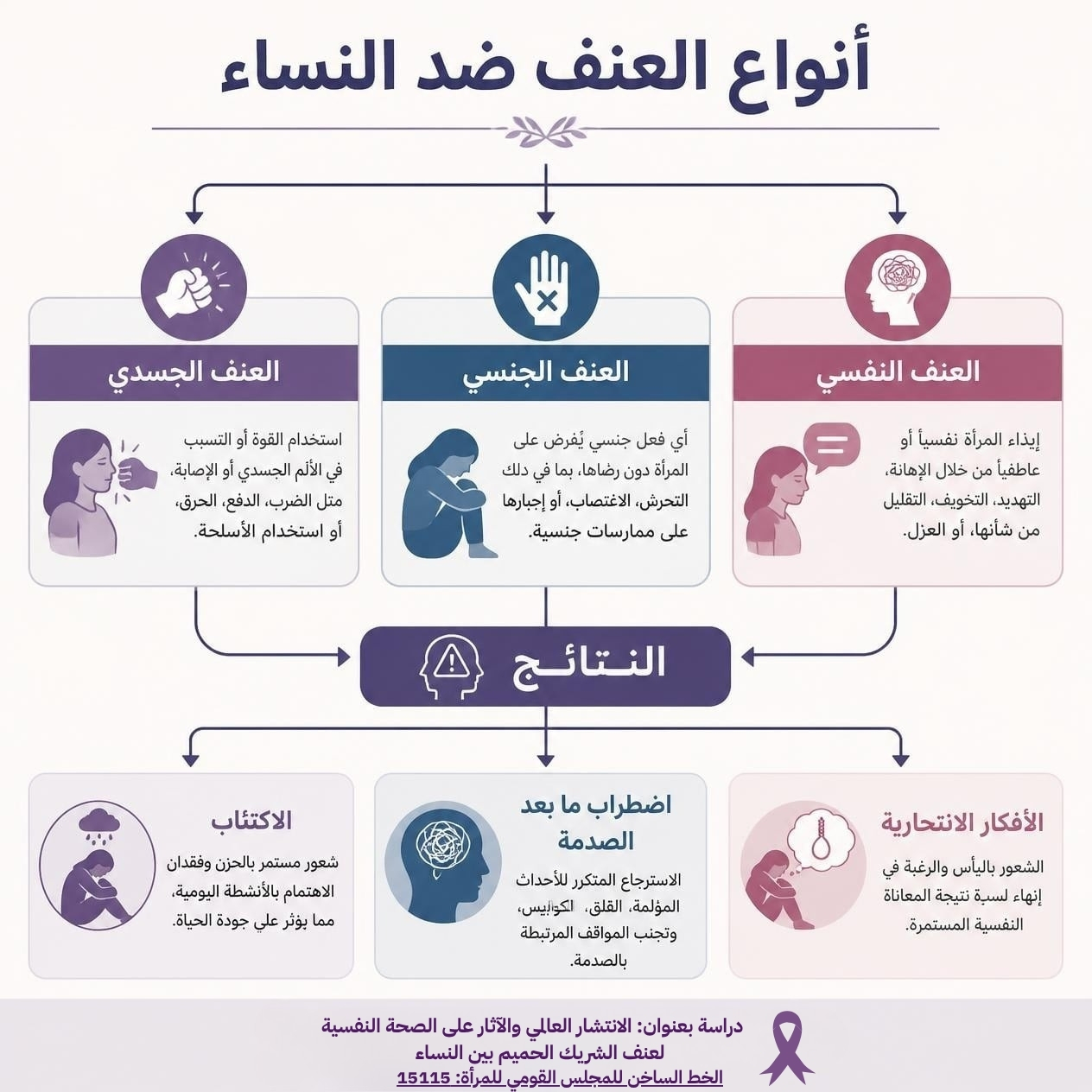
Psychologist Riham Ali says the phenomenon of some men perpetrating violence and abuse against former partners requires societal and legal awareness to protect women and provide them with safety, particularly given that some forms of abuse are extremely cruel, extending to murder, harming children, disfigurement, and destroying property. This leaves victims feeling unsafe, anxious, and lacking confidence, trapped under the weight of the abuse.
Ali notes that perpetrators of violence against former partners tend to have psychologically and behaviourally unhealthy personalities. They always find justifications for themselves and see themselves as victims, not perpetrators, viewing their planned and executed abuse as the recovery of supposed rights of control over their former partners' lives.
She points out that the feeling of being unable to escape an abusive relationship even after separation can cause women to develop depression, anxiety disorders, excessive fear, and other conditions that negatively affect their quality of life and that of their children.
Recovery, she says, begins once the assaults and threats have stopped, through social reintegration. Being around good people and avoiding isolation provides a sense of safety and some protection from the abusive former partner.
Ali stresses the importance of women who have experienced violence from former partners receiving psychological support, which may include therapy. This helps them rebuild their psychological resilience, and mitigate the negative effects of their difficult experiences, not only during the marriage or relationship but during the separation itself, which often defies their expectations. Many assume that separation will solve their problems, making post-separation violence and abuse all the more devastating because it is the opposite of what they expected.
Can the unified anti-violence law protect women?
In July 2026, MP Maha Abdel Nasser announced that she would sponsor the "Unified Law to Combat Violence Against Women and Girls," drafted by the Task Force for Developing and Improving the Legislative Framework for the Protection of Women, with the participation of the Egyptian Center for Women's Rights, the Cairo Foundation for Development and Law, the Egyptian Female Lawyers Association, and Tadween for Gender Studies.
This step came after years of attempts to pass the law through parliament. In December 2017, nine feminist human rights organisations announced the formation of the task force. Despite several female MPs sponsoring the draft – including Nadia Henry and Nashwa El-Deeb in previous parliaments – the bill was never debated in the House of Representatives.
Several of the participating organisations decided to update the draft in light of societal changes related to violence against women in recent years. Five organisations released a final updated version in mid-2025, renewing their call for the law's adoption. This was before MP Maha Abdel Nasser announced her sponsorship inside parliament.
The updated draft, a copy of which Athar obtained, contains 81 articles across four sections, addressing multiple forms of violence against women including digital violence, economic violence, and domestic violence. It covers a range of crimes commonly committed against separated women, including physical assault, causing injuries, detention and kidnapping, acts causing psychological harm, acid attacks, and stalking.
On digital violence, frequently committed against separated women by former partners, the draft criminalises photographing, broadcasting, or publishing any private images or information about women and girls; manipulating or altering them into pornographic content and threatening to publish them; distributing intimate images taken during or after marriage; publishing women's personal data; and committing material or sexual blackmail.
The law provides urgent protection mechanisms
Intisar El-Said, a lawyer and chair of the board of trustees of the Cairo Foundation for Development and Law, and one of the experts who developed the draft, says that a comprehensive or unified law against violence towards women is not merely a legislative detail. It represents a change in the legal philosophy itself.
El-Said points out that laws addressing violence in Egypt are scattered. The penal code covers assault and murder; family law covers maintenance, divorce, and custody. Violence against women is not recognised as an integrated phenomenon with social, economic, and cultural roots, which is precisely why a unified law matters.
"The unified law is necessary because it recognises that violence against women is a gender-based phenomenon, not just an individual offence," she says. "It unifies definitions – psychological, economic, digital, and domestic violence – instead of leaving them vague. It creates urgent protection mechanisms like protection orders, safe houses, and legal and psychological support. This is crucial for women who are at risk – particularly former partners and victims of violence. The law links prevention and punishment: it does not only punish the perpetrator but prevents repeat offences and addresses the root causes through its various mechanisms."
El-Said emphasises that former partners are among the most vulnerable groups, as evidenced by cases of assault, murder, threats, and digital defamation. She attributes the growth of this phenomenon to some men's feeling of lost control after a relationship ends and their desire to punish the woman for claiming her rights, whether in divorce, khul', custody, or maintenance, compounded by the absence of swift legal deterrence and effective protection.
The unified law, she explains, does not mean more provisions. It means an integrated vision that places women's dignity at the heart of justice, and sends a clear message that a former partner has the right to protection from all forms of harm, and that separation does not strip her of her right to safety.
She adds that the law addresses these problems by providing immediate prevention and protection. It allows a woman to request an urgent protection order barring the attacker from approaching, contacting, or threatening her, even before a final court ruling. It criminalises psychological, economic, and digital violence, not only physical violence.
El-Said notes that the law would achieve greater deterrence, with harsher penalties for post-separation violence due to its clearly retaliatory nature. It would protect women who turn to the courts to claim their legal rights, reducing the crimes and threats targeting former partners when they seek justice. It would establish specialised units within prosecution and police services better equipped to receive their complaints, and provide legal and psychological support for survivors of violence.
El-Said describes the passage of the unified law as "a key to the door of combating violence," one that must coincide with reforming the institutional culture around violence against women, particularly among those who handle complaints in police and prosecution services, training investigators to deal with domestic violence cases, and launching media and awareness campaigns against violence in all its forms.
Between the stories of Salma, Mai, Asmaa, and other survivors, and a draft law that has waited years for parliamentary debate, the question remains: are legal provisions alone enough to protect women after separation, or does it also require a genuine change in how society views a woman who asks for her freedom? Until the unified law is passed and effectively enforced, former partners will continue to need urgent protection mechanisms and legal and psychological support networks to shield them from what is more dangerous than the divorce or the separation itself.